The Collector's Journal N°3
A. Lange & Söhne · The Watch Collectors
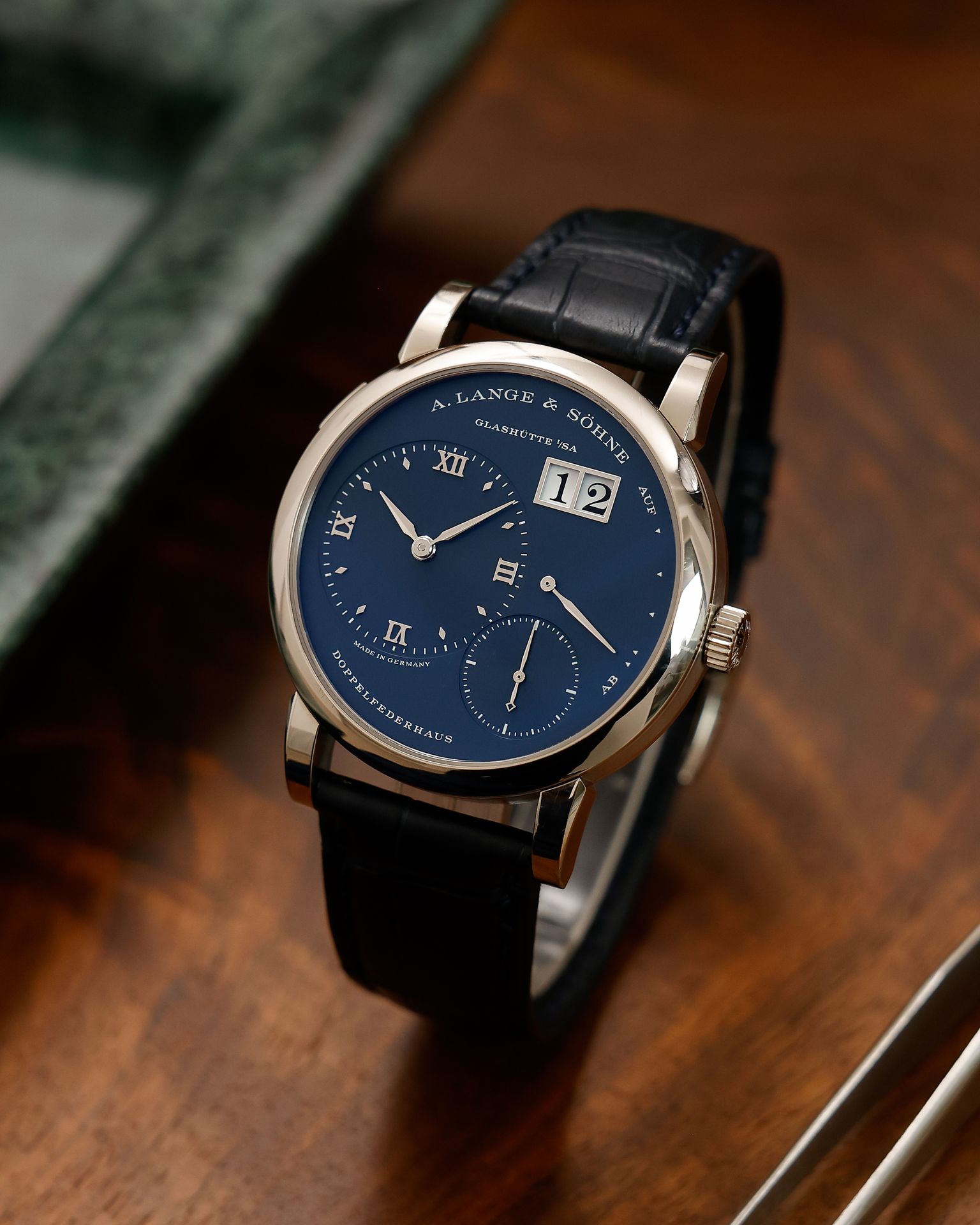
The Lange 1 “Blue Series”
Reference 191.028, in white gold
Some watches are admired. A very small number rewrite the rules. When A. Lange & Söhne unveiled the Lange 1 in 1994, it did something almost no serious watch had dared to do: it abandoned symmetry entirely, and somehow looked more balanced for it. Three decades on, the Lange 1 is considered one of the genuine icons of modern watchmaking. The white-gold “Blue Series”, reference 191.028, is that icon in its most discreet and most quietly coveted colour.
Chapter One
A House Erased, Then Reborn
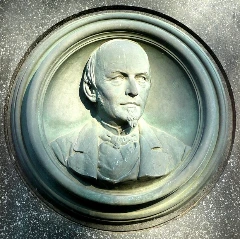
In 1845, a Dresden-trained watchmaker named Ferdinand Adolph Lange set up a workshop in Glashütte, a poor town in the Saxon Ore Mountains. With fifteen apprentices and the backing of the Saxon king, he did more than build a company: he founded an entire industry, and turned Glashütte into the cradle of German watchmaking. His three-quarter plate, a single large bridge holding the movement together, became a hallmark still used by the brand today.
Then history intervened. After the Second World War the company was nationalised under Soviet occupation, and by 1951 the Lange name had vanished into a state combine. For four decades it simply did not exist. Only when the Berlin Wall fell did Walter Lange, the founder's great-grandson, see his chance. Together with the watch industry veteran Günter Blümlein, he re-registered A. Lange & Söhne on 7 December 1990, exactly 145 years to the day after the original founding. Four years of secret development followed.
Chapter Two
The Watch That Announced a Comeback
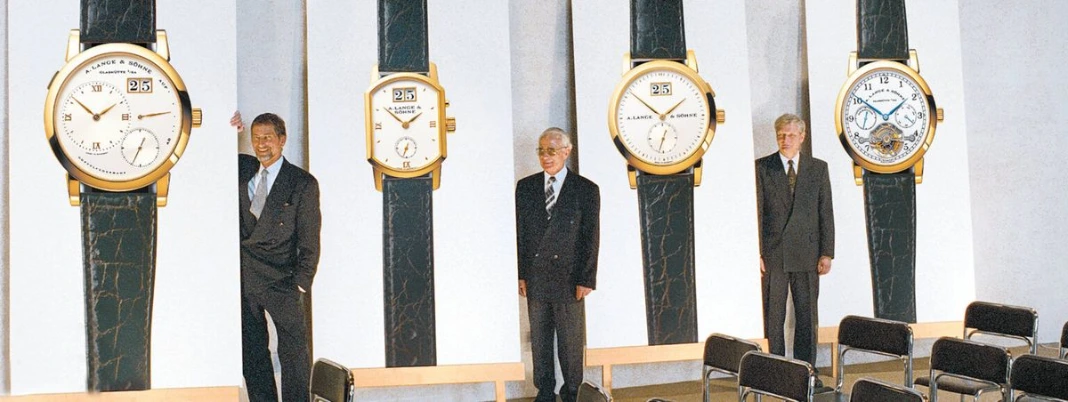
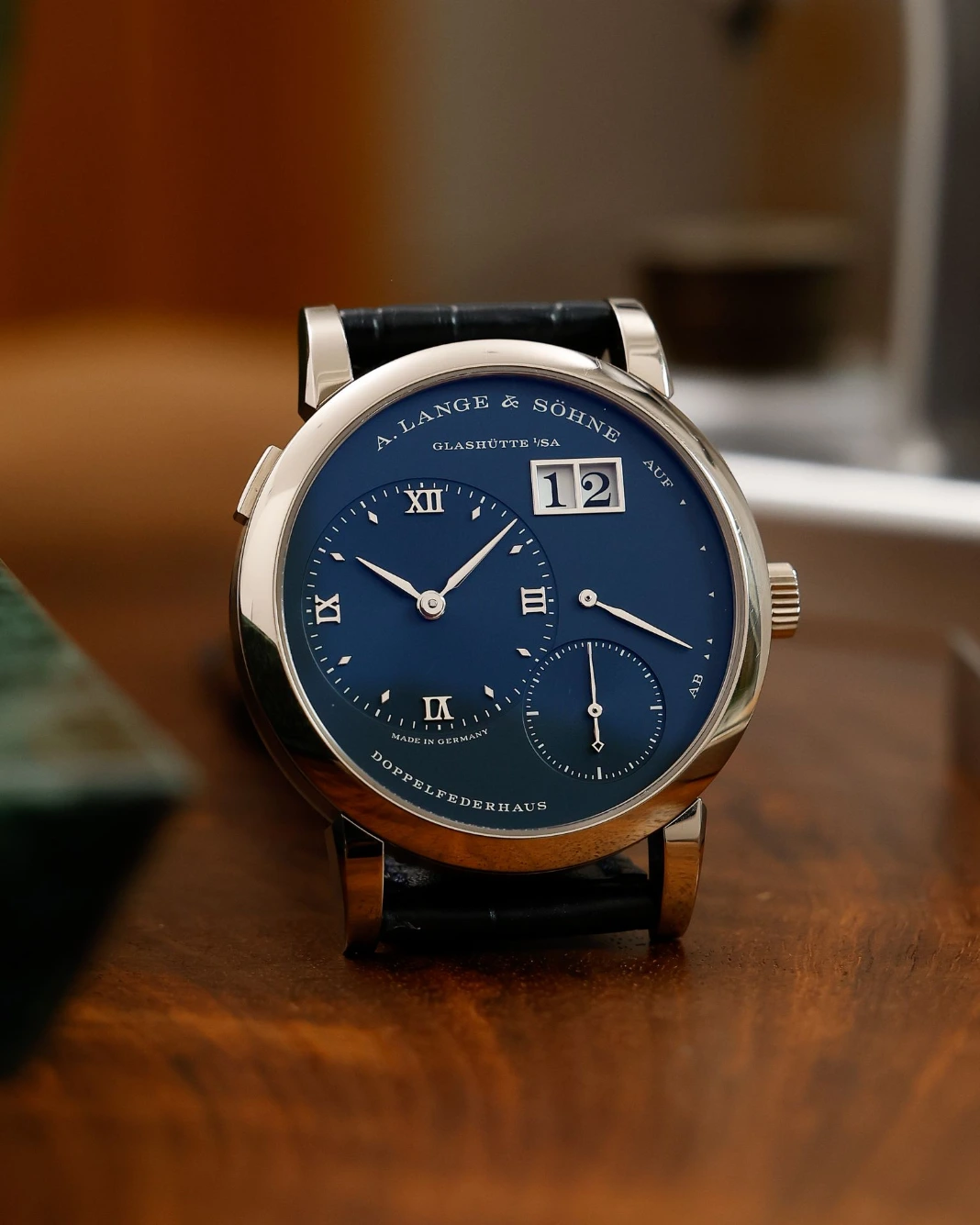
On 24 October 1994, in a palace beside the Semper Opera House in Dresden, Lange presented four watches. One of them changed everything. The Lange 1 placed the hours and minutes off to one side, then balanced them against a subsidiary seconds, a power-reserve indicator and an oversized date. Nothing lined up in the conventional sense, yet the whole face felt serene. The secret was mathematics: the displays are laid out on the golden ratio, arranged so that asymmetry reads as harmony.
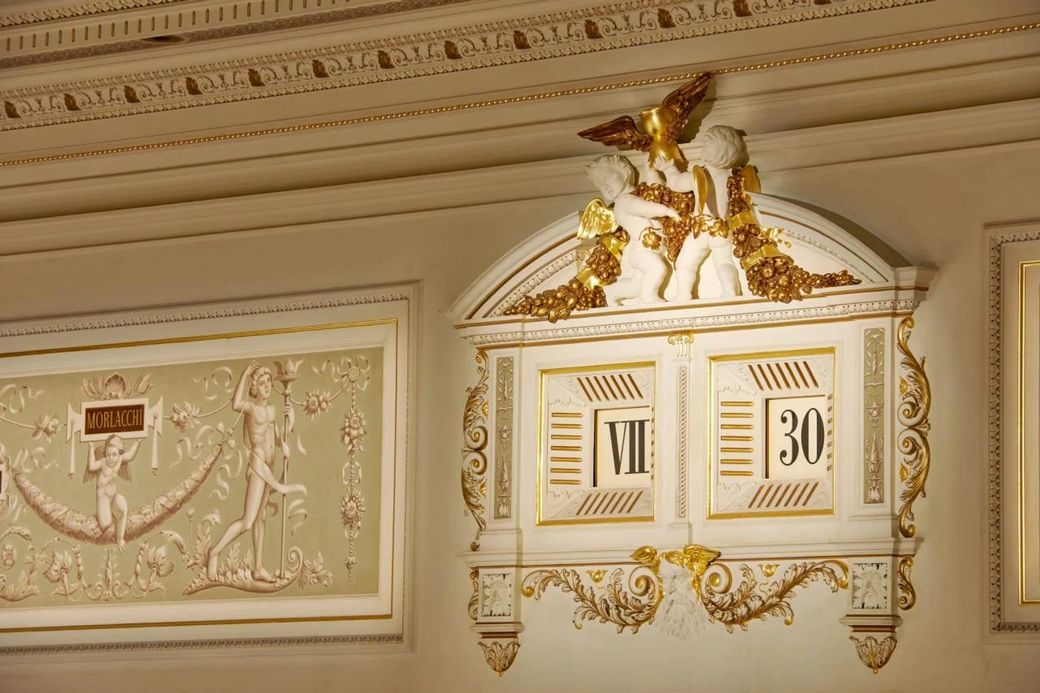
The famous outsize date has a story of its own. It was inspired by the five-minute clock built in 1841 above the stage of the Semper Opera House, so that audiences could read the time in the dark without interrupting the performance. That clock was the work of Johann Christian Friedrich Gutkaes, the master watchmaker who trained Ferdinand Adolph Lange. A century and a half later, Lange turned a piece of Dresden's civic furniture into the signature of its most important wristwatch.
“Our watches must be classic and understated in looks, sleek, useful and German in nature.”
Günter Blümlein, co-founder and first CEO of the revived A. Lange & Söhne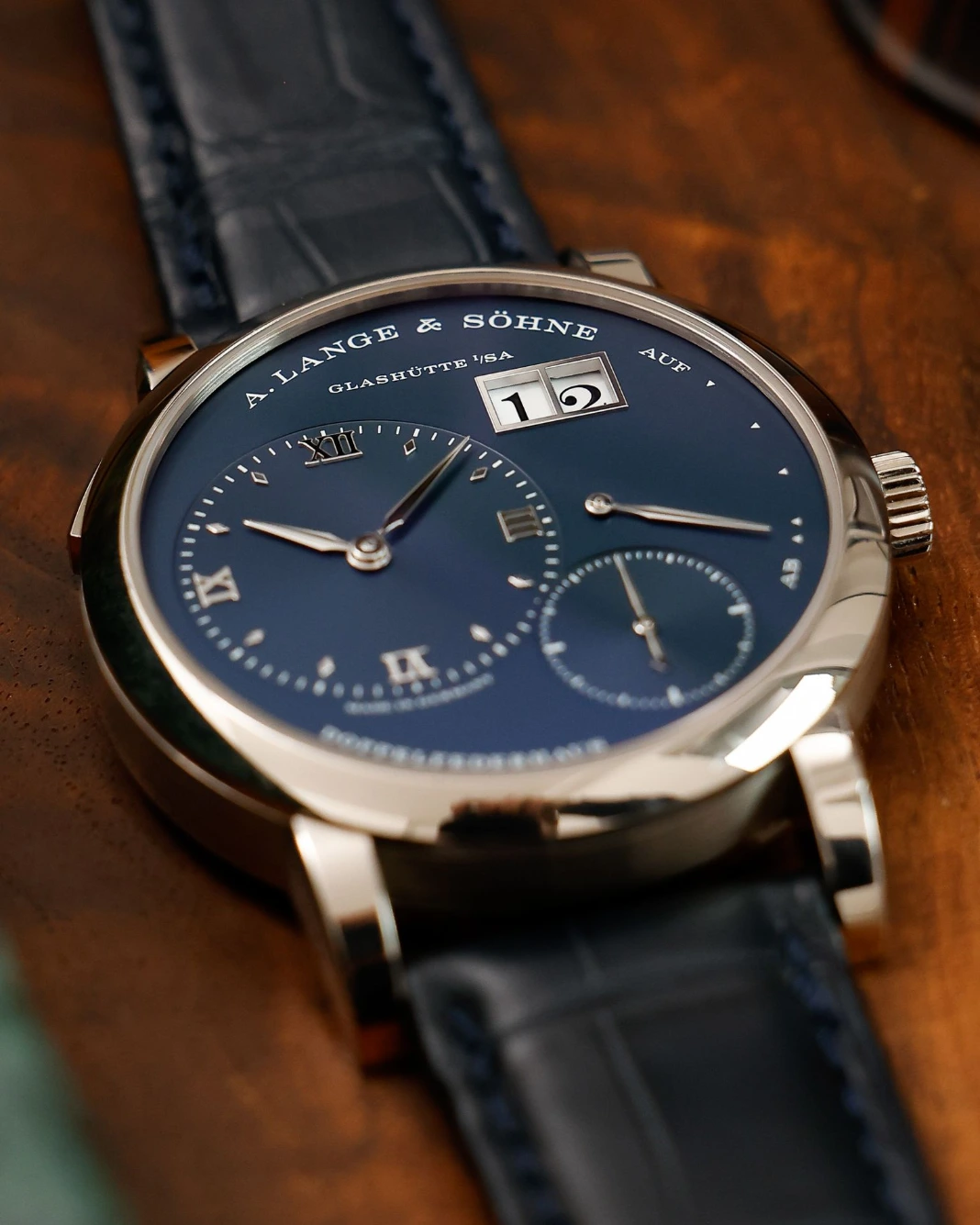
Chapter Three
Inside: the Calibre L121.1
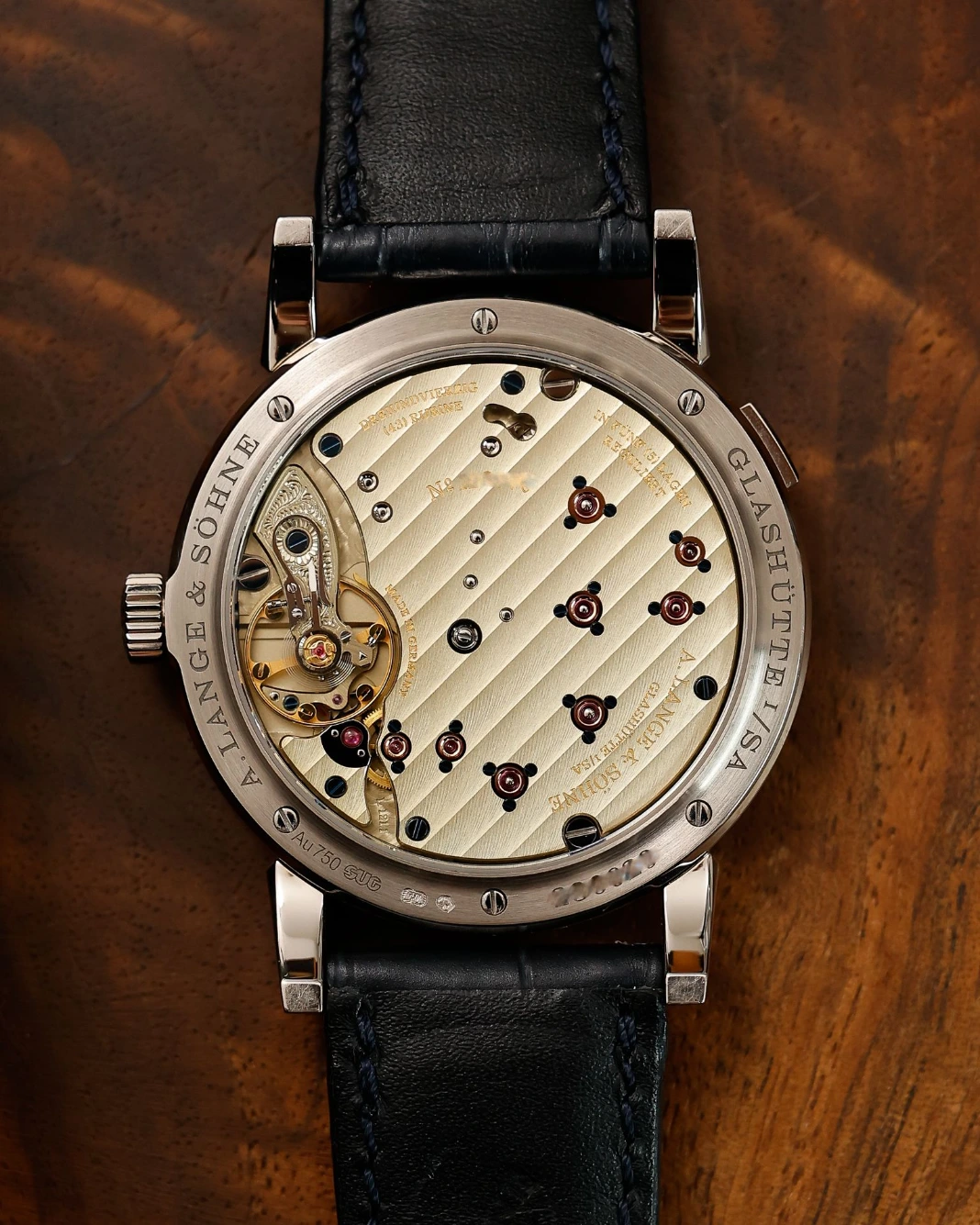
In 2015 Lange gave the Lange 1 a new heart while leaving its face untouched. The manually wound calibre L121.1 was the fiftieth movement the revived manufacture had built, and it distilled twenty-five years of experience. Two mainspring barrels, stacked, store a full 72 hours of running time. The outsize date no longer creeps: it snaps over instantly at midnight, driven by energy quietly gathered across the preceding hours.
At its core sits a balance with eccentric poising weights and, rarest of all, a balance spring made in-house. Very few watchmakers produce their own hairsprings; Lange is one of them. The movement beats at a calm 21,600 vibrations per hour and is built from 368 individual parts, each finished by hand.
Chapter Four
Finishing: the Saxon Signature
Turn the watch over and the case-back tells the rest of the story. The three-quarter plate is made of untreated German silver, which warms to a soft golden patina with age, and is decorated with Glashütte ribbing. Eight gold chatons, each held by blued screws, frame the jewels. Above the balance sits a cock engraved entirely by hand, so that no two examples are ever quite identical: it is, in effect, the engraver's signature.
In the Lange tradition, the movement is assembled twice. It is built, adjusted, then taken apart so every surface can be cleaned and finished, and finally reassembled for good. It is slow, uncompromising, and entirely the point. Even parts no eye will easily see, the underside of a bridge, the inner angle of a screw head, are finished as carefully as the parts on display. It is a philosophy carried over directly from Ferdinand Adolph Lange's own workshop rules of 1845, which insisted that quality could never be rushed.
Chapter Five
Why the “Blue Series” Matters
White gold is the connoisseur's metal. To a passer-by it reads almost like steel; to someone who knows, it is the quiet luxury choice. Against it, the deep blue rhodié dial brings a contemporary tone to an architecture that has barely changed since 1994. It is a rarer sight than the classic silvered dial, and collectors have taken to calling this white-gold, blue-dial reference the “Blue Series”.
The Lange 1 has become a modern blue-chip: produced in modest numbers, finished entirely by hand, and remarkably steady in its desirability. Unlike watches that chase trends, its dial architecture has needed no revision in over thirty years, a rare thing in an industry that reinvents itself every season. This example, reference 191.028, is offered as a full set with its original box and papers. It is the kind of watch that rewards the person who understands exactly what they are looking at, and quietly educates everyone else.
The Reference at a Glance
Reference 191.028 · White gold
38.5 mm case, 9.8 mm thick · Blue rhodié dial
Calibre L121.1, manual winding
72-hour power reserve · Sapphire case-back
Blue alligator strap · Full set, box & papers
€ 47,500
Available now at The Watch Collectors, Knokke & Brussels. Enquiries and viewings welcome at info@thewatchcollectors.com.