The Collector's Journal N°1
Patek Philippe · The Watch Collectors
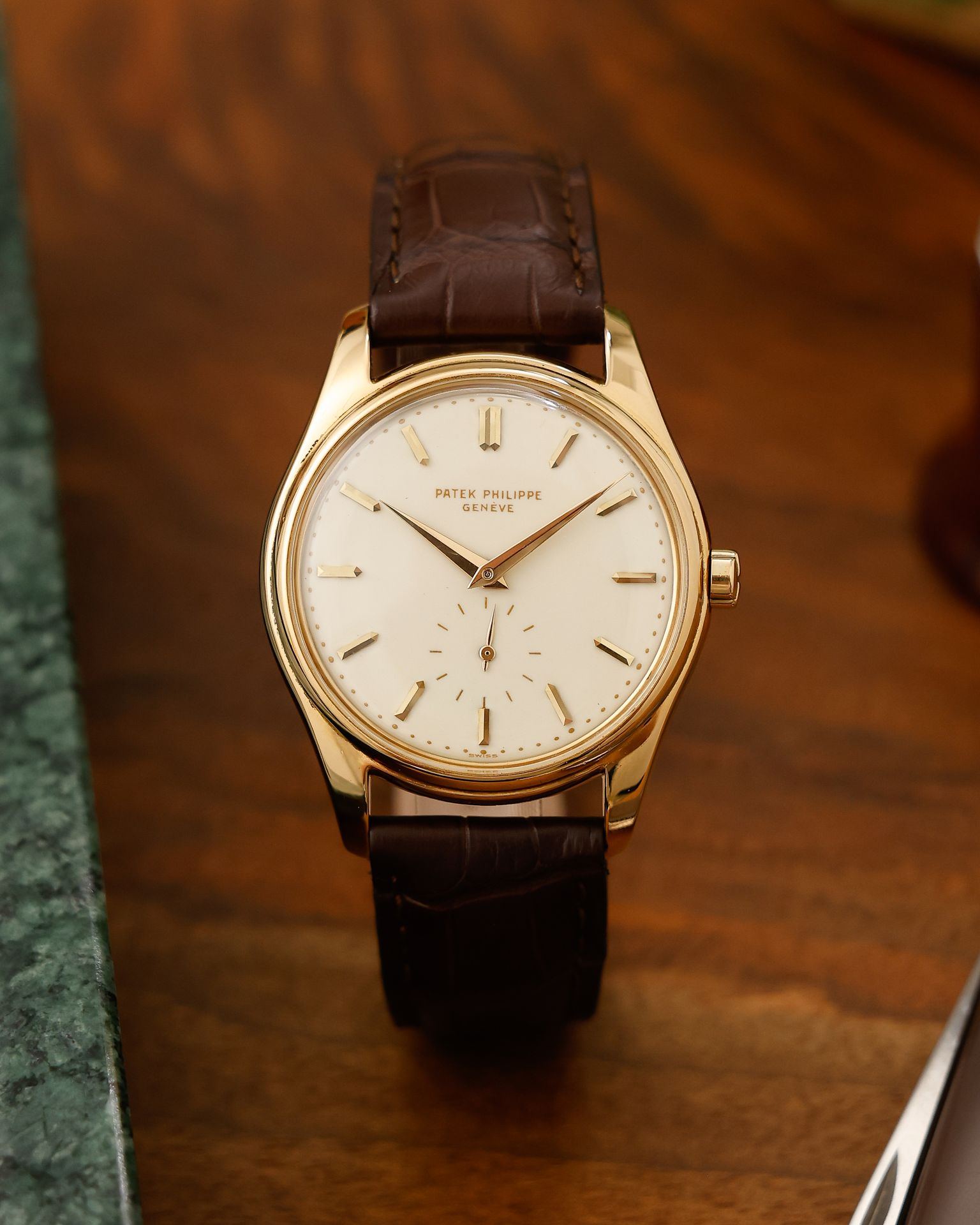
The Calatrava, First Automatic
Reference 2526, in yellow gold, 1955
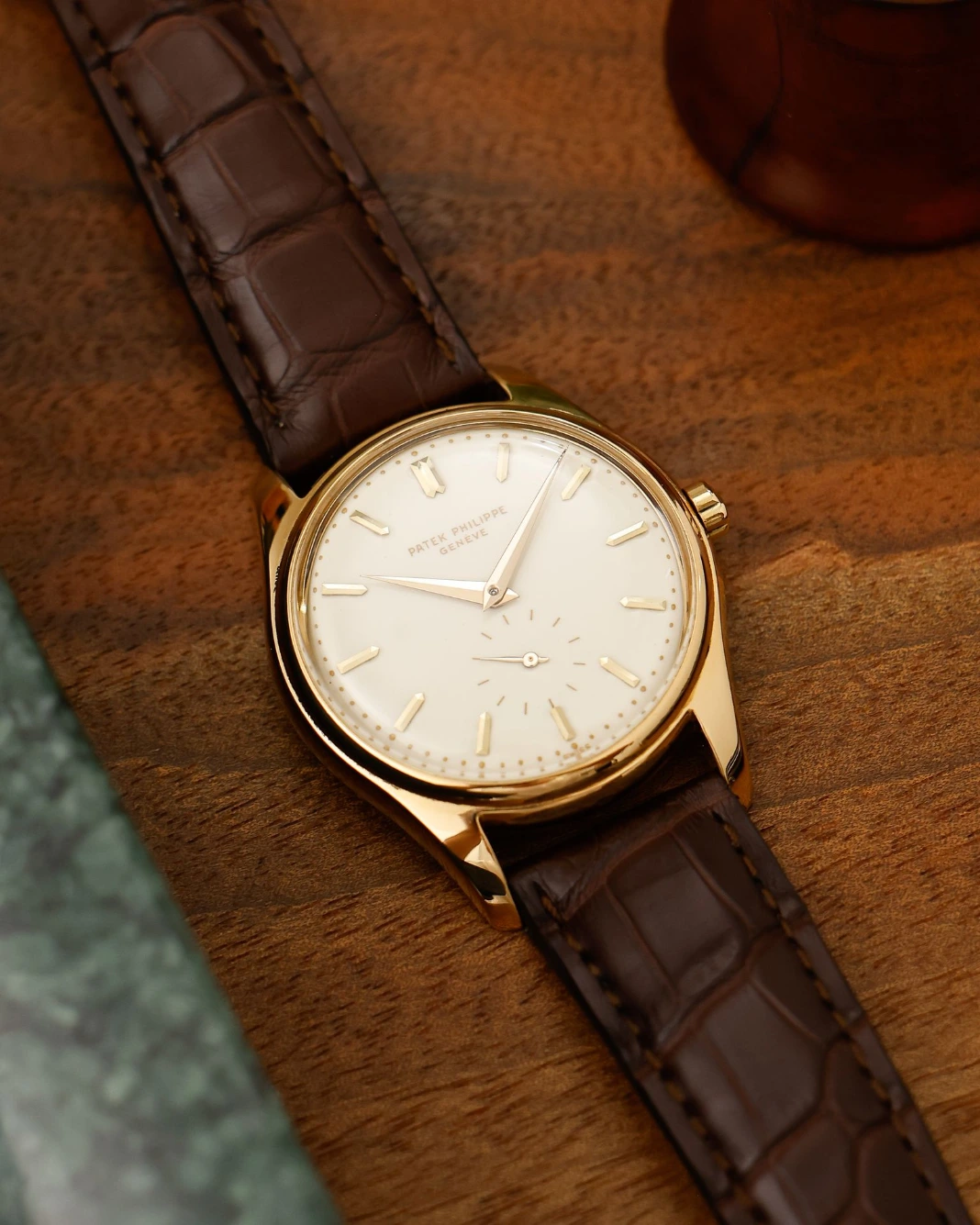
Some watches are important because of what they added. This one is important because of what it finally allowed Patek Philippe to do without compromise. The reference 2526 was the house's first entirely self-made automatic watch, and rather than treat the achievement quietly, Patek gave it one of the most beautiful dials it has ever produced: a fired enamel face that collectors now consider among the finest in the vintage market. This example, cased in yellow gold, brings both stories together in one watch.
Chapter One
A Name Built on Patience
Patek Philippe traces its origin to 1839, when the Polish-born Antoine Norbert de Patek founded a Geneva watchmaking firm with François Czapek. The turning point came in 1844, when Patek met the French watchmaker Jean Adrien Philippe in Paris. Philippe had just invented a keyless winding and setting system, operated from the crown rather than a separate key, and Patek recognised immediately what it meant for the future of the wristwatch. Philippe joined the company, and by 1851 the house had been renamed Patek Philippe & Co. That same year, Queen Victoria purchased a Patek Philippe pendant watch at the Great Exhibition in London, giving the young firm a royal endorsement it never really lost.
The company's modern chapter began in 1932, when it was purchased by brothers Jean and Charles Henri Stern during a period of financial difficulty. The Stern family were not outsiders: their own business, Fabrique de Cadrans Stern Frères, had been supplying Patek Philippe with dials for years. That familiarity with the product, rather than a purely financial rescue, is part of why the transition worked. The Stern family has owned Patek Philippe ever since, making it the last major independent, family-owned watch manufacturer in Geneva.
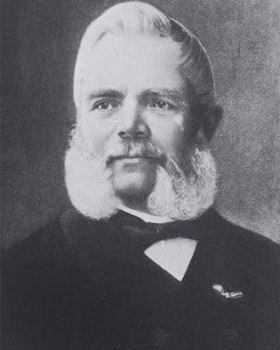
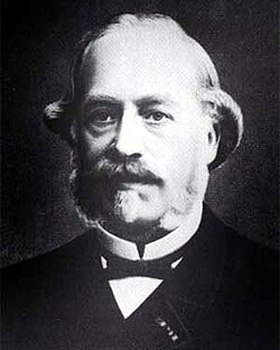
Antoni Norbert de Patek (1812–1877) and Jean Adrien Philippe (1815–1894), founder and co-founder of the house. Source: Wikimedia Commons.
Chapter Two
Form Follows Function
The same year the Sterns took control, 1932, Patek Philippe introduced the watch that would define its identity ever since: the Calatrava, reference 96. Its round 31mm case, flat bezel and clean dial were a deliberate departure from the ornate pocket watches of the era, closer in spirit to the Bauhaus principle that form should follow function than to anything else in fine watchmaking at the time. The identity of its actual designer has been lost to history. A popular story credits the English horologist David Penney, but Penney was not even born until years after the reference 96 was released; the name most likely became attached to early illustrations of the watch and was mistaken for its creator. What is certain is the philosophy behind it: strip a watch down to what matters, and let the proportions do the work. That idea has anchored the Calatrava line for more than ninety years.
“You never actually own a Patek Philippe. You merely look after it for the next generation.”
Patek Philippe advertising, since 1996Chapter Three
Waiting Out a Patent
Rolex patented its rotor-driven self-winding mechanism in 1931 and held the rights for two decades. Patek Philippe, unwilling to imitate a competitor's solution, waited. When its own patent protection cleared, Patek unveiled the reference 2526 at the 1953 Basel Fair: the house's first automatic watch, and the first built entirely on its own automatic calibre, the 12-600 AT. It was worth the wait. The movement carried a Gyromax balance, Patek's own adjustable-mass balance wheel design, 30 jewels, a bi-directional 18k gold rotor finished with guilloché engraving, and a swan-neck micrometer regulator, all adjusted to five positions plus heat, cold and isochronism, and stamped with the Geneva Seal. Many specialists still consider the 12-600 AT among the finest automatic movements ever built, self-winding architecture as fine as anything Patek had achieved by hand.
The case matched the ambition inside it. Designed by Frédéric Baumgartner, who had already made his name on Patek's earlier waterproof cases, the ref. 2526 paired a screw-down back with a flat bezel and downturned lugs, at 36mm noticeably larger and more architectural than the dress watches around it. For a mid-1950s Calatrava, that scale still feels unusually modern today.
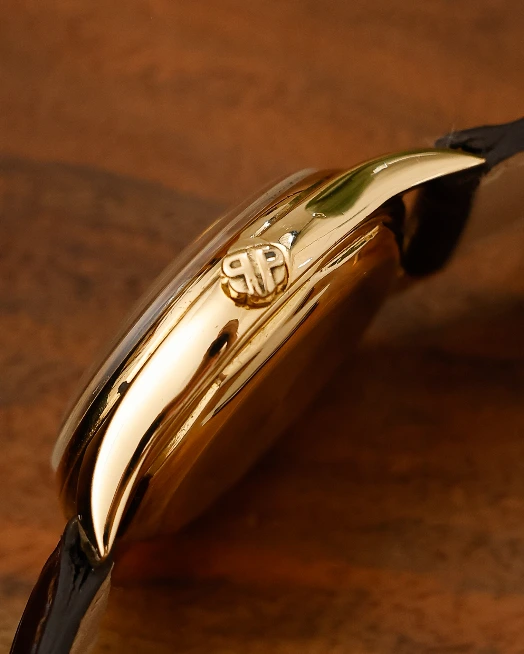
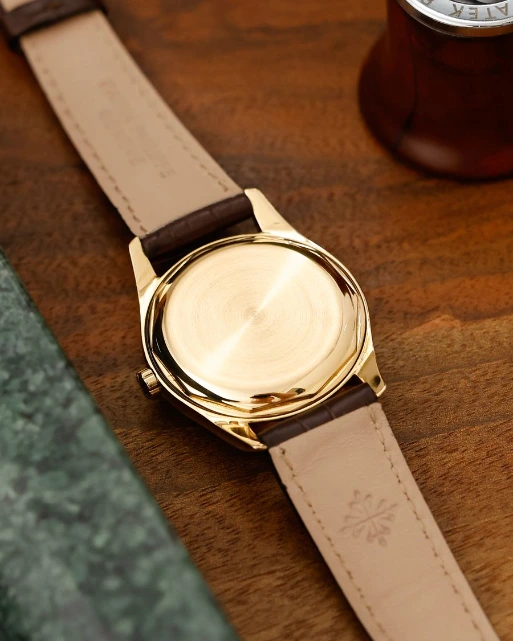
The stamped PP monogram at the lug, and the solid screw-down case-back.
Chapter Four
The “Porcellana” Dial
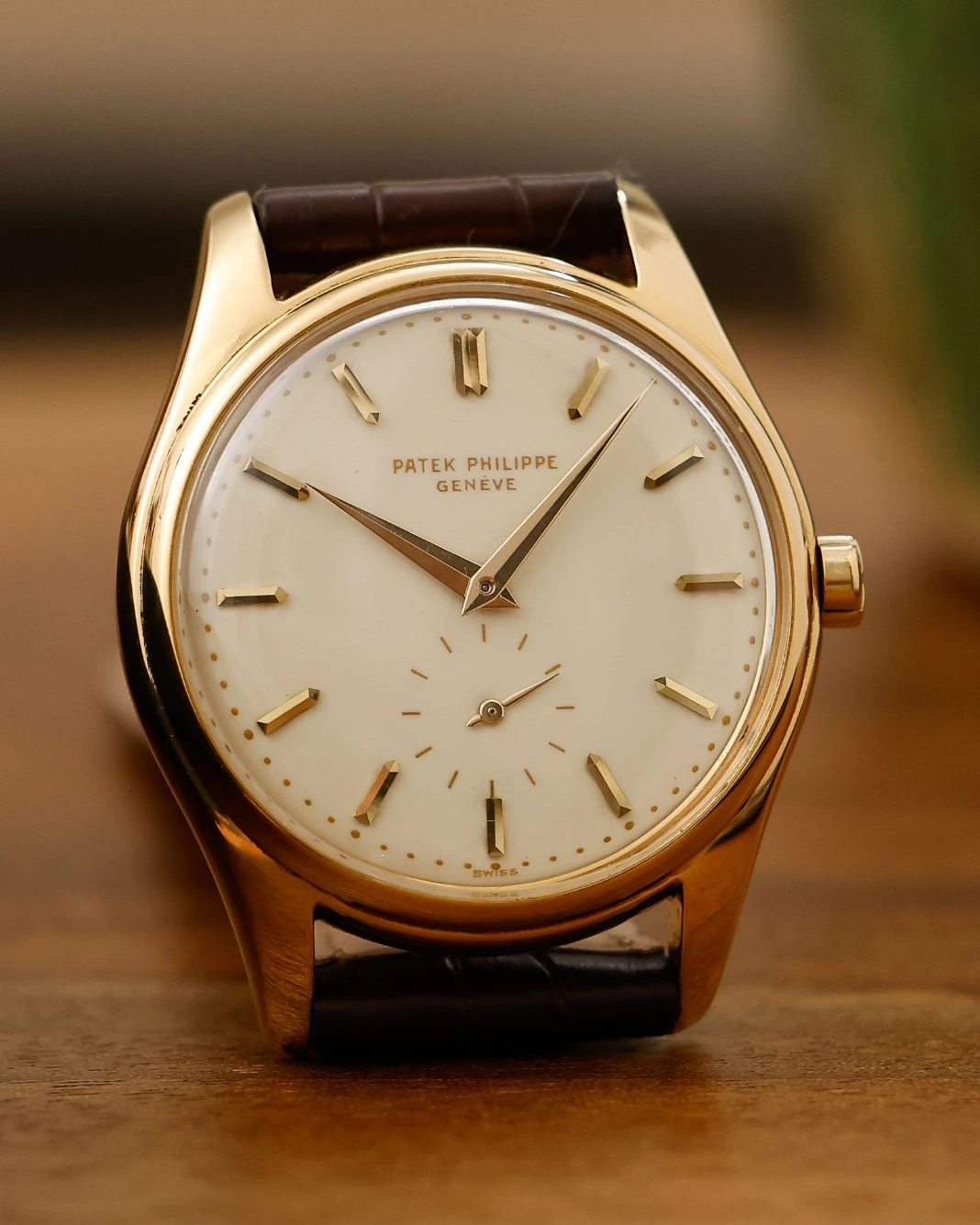
Patek could have given the ref. 2526 an ordinary painted or lacquered dial. Instead it chose enamel, fired twice onto a sterling silver disc, a technique period marketing described simply as offering greater beauty and durability than anything that came before it. Unlike paint, enamel does not fade, yellow or scratch the way a lacquer dial can; it simply ages into a soft, glass-like depth. On the earliest examples, including this one, the applied gold markers are pinned directly through the fired enamel surface, leaving faint dimples on the reverse that specialists use to identify first-series dials. Collectors have nicknamed this glossy, porcelain-like finish the “Porcellana” dial, and it remains one of the most sought-after dial types in the entire vintage Patek Philippe catalogue.
What makes the choice more remarkable is that this was never a limited edition or a showpiece. The enamel dial was standard production on the ref. 2526, the watch Patek intended as the new backbone of its collection. It is a rare case of a manufacturer giving its most technically important new model, not a special one-off, its most labour-intensive dial.
Chapter Five
Why Collectors Chase This Watch
The ref. 2526 sits at a genuine intersection of Patek Philippe's story: the first watch to prove the house could out-engineer its own patience, wrapped in the finest dial technique available at the time. Production ran only from 1953 to 1959, and enamel examples in good condition, in any metal, are increasingly hard to find. Yellow gold accounts for the largest share of production, yet original, undamaged enamel dials remain the exception rather than the rule; enamel is durable, but it is also unforgiving of careless handling, and many dials from this era have not survived in this state.
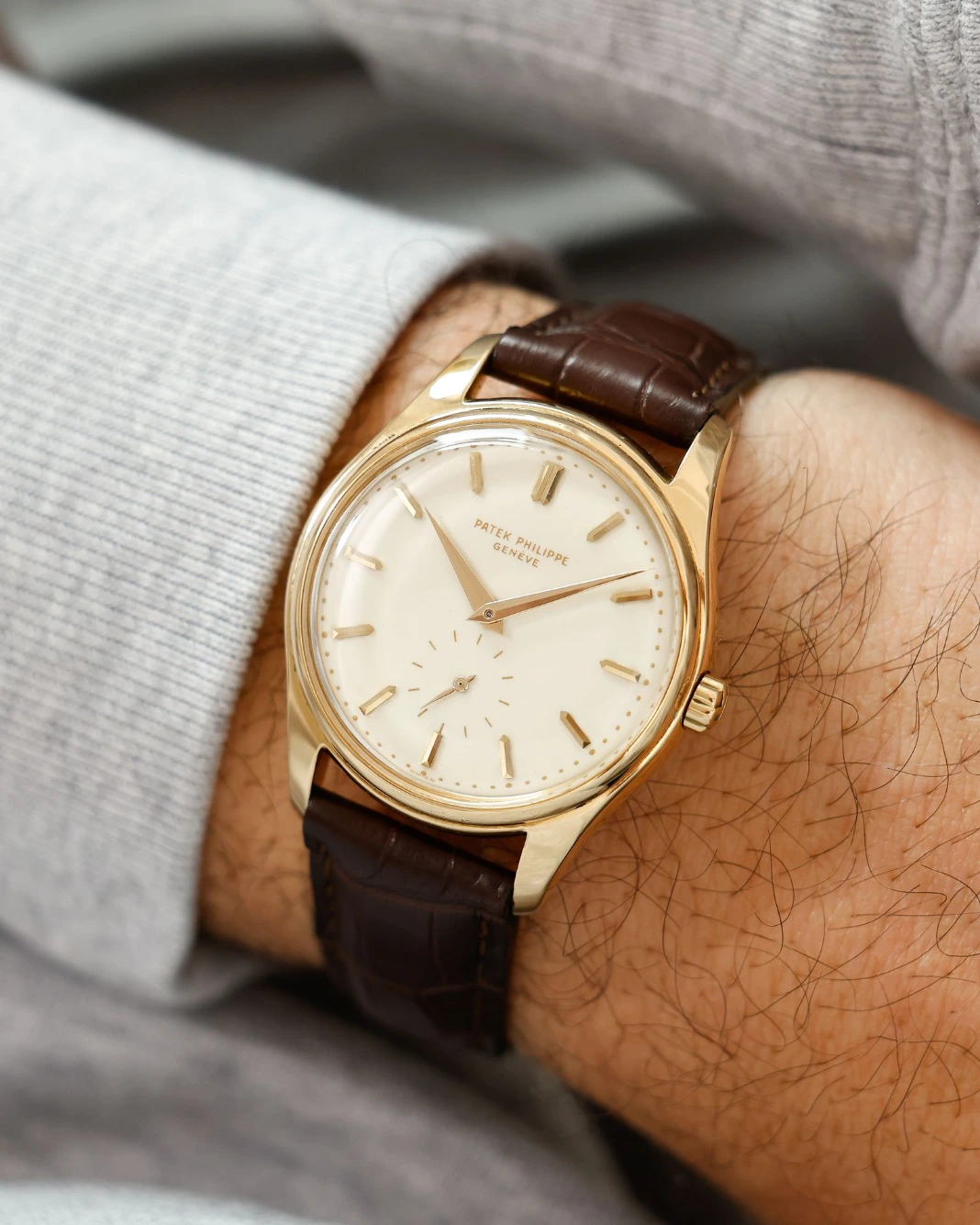
This example is offered with an extract from the Patek Philippe archives confirming its production details, along with service papers dated March 2026. Case, case-back, crystal and bezel wear are all recorded as barely visible, and the dial itself shows no wear at all. For a collector, that combination, historical importance, a dial technique that largely disappeared from the catalogue in later decades, and genuinely careful condition, is what separates a watch worth owning from one merely worth admiring.
The Reference at a Glance
Reference 2526 · Yellow gold
36 mm case · White fired enamel dial
Calibre 12-600 AT, automatic
30 jewels, Gyromax balance · Plexiglass crystal
Brown alligator strap · Extract of archives & service papers
€ 65,000
Available now at The Watch Collectors, Knokke & Brussels. Enquiries and viewings welcome at info@thewatchcollectors.com.